The Farm at the Edge of the World: giveaway!
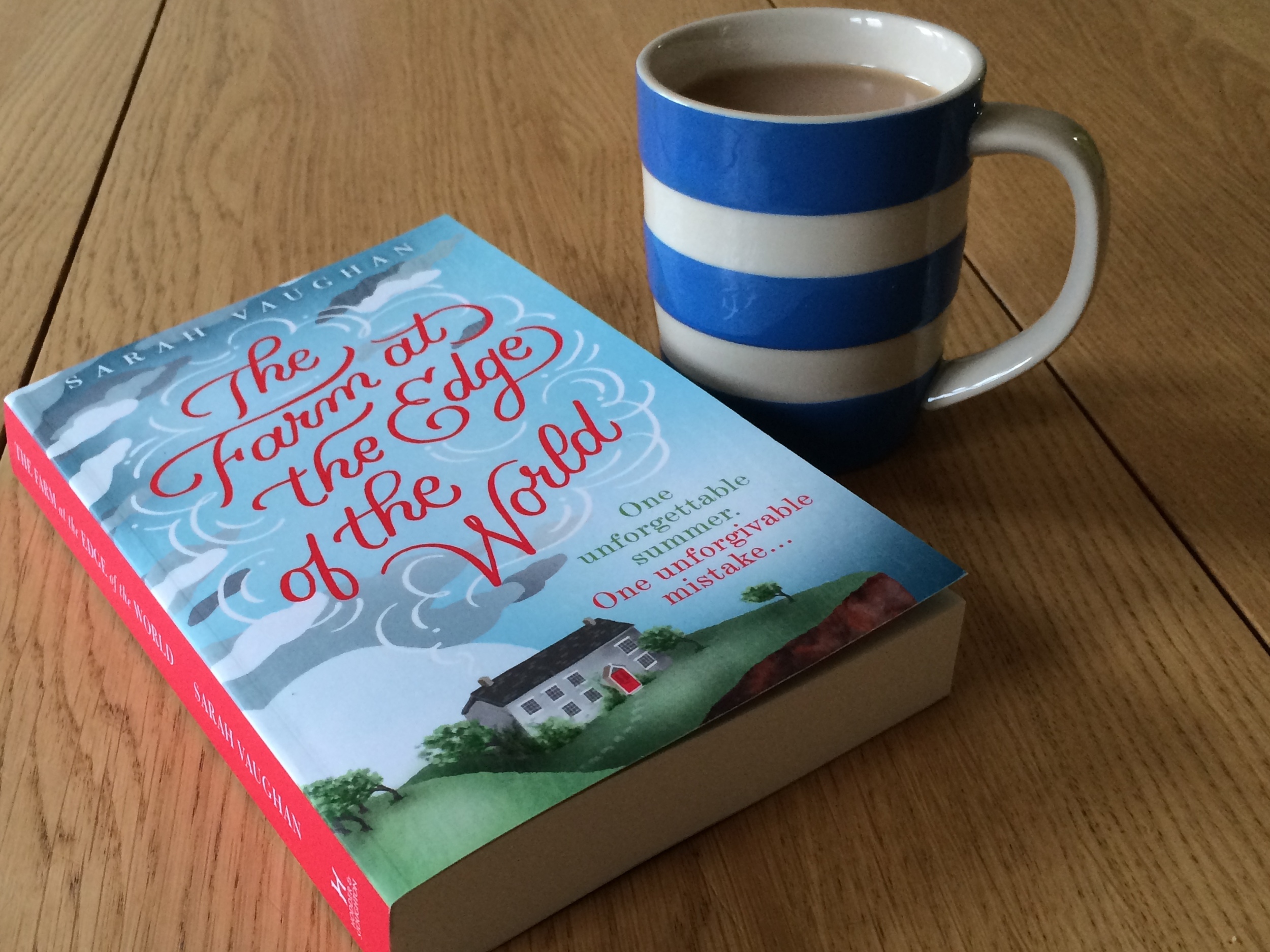
My new novel, The Farm at the Edge of the World, will be published next month (June 30) and to celebrate Hodder have organised a goodreads giveaway. Simply sign up to win one of twenty copies: http://fal.cn/2x7i
Here's the story behind the novel which focuses on love, loss, regret and atonement - all played out on a stretch of the north Cornish coast : http://bit.ly/1Tjgvo1
And here's what some early readers have already said:
A beautifully evocative story of love, loss and forgiveness. You can taste, feel, see and hear Cornwall on every page as the characters pull you into their lives. Loved it. (Liz Fenwick)
Absolutely loved it. Very rare I sit and devour 220 pages in one afternoon. (Nina Pottell)
An evocative and page-turning story of love and heartbreak, written in beautiful and poignant prose that captivated me from first word to final page (Katie Marsh)
A wonderful book about love and loss through the eyes of three generations of Cornish women. Lovable, flawed, and so very human, each character had me rooting for them right until the very end. But it was the setting on the north Cornwall coast that makes me love this book: the weather, the seasons, the landscape, the house are all written so vividly that I could step into that place and instantly know my way around. (Claire Fuller)
Sarah Vaughan not only writes beautifully but her stories and characters have a way of climbing into your heart and staying there long after you've turned the last page . . . Highly recommended! (Fleur Smithwick)
Cover reveal: The Farm at the Edge of the World

When I was a girl, we holidayed in a pilot's cottage on the edge of a cove in north Cornwall, where the water pooled petrol-blue and deep then slithered over the sand all day. Behind us the cliffs were high: a headland where you were buffeted by the wind and the sky stretched from Land's End, to the west, and all the way up to Devon. Infront of us, the estuary shifted: silvered puddles of water then ribbons of sea, and then a mass of charcoal ocean through which fishing trawlers chugged, drawing seagulls and wheeling guillemots in their wake.
Beyond the sea, there were fields and a farm: a low-slung stretch of granite seen on the horizon. Our stay would often coincide with the harvest and I would watch the combine as it trundled through the fields of barley all week. The air was thick with the smell of crushed camomile, dog rose and gorse, and the shoreline casually offered its gems: jewel-like anemones; blennies and crabs; a shoal of mackerel, spiralling through the water; a pair of seals, spied from the cliffs as they basked on the salt-lashed rocks beneath.


Years later, I took my then-boyfriend to this place. "Why didn't you tell me this existed?" he asked me. Later still, we began to stay, first in the cottage, then on the farm with our kids. And as the lane opened up to offer a view of the estuary, and I spied the cottage where I holidayed as a child, I would always have the same response. "Oh no," one child would say. "Don't tell me," my husband would look incredulous. "Oh yes," the other would add. "She's crying again."
My over-emotional, some might think excessive, response is not just due to the beauty of this spot - though, on a cloudless day, it takes my breath away - but to the fact that this place is packed tight with memories. A world over-invested with positive emotions: the place I remember feeling happiest as a child. And so, when I decided to write about an isolated farm on a stretch of the north Cornwall coast - a farm filled with more complex memories; darkness as well as light - it was inevitable that my recollections would feed into it.
The Farm at the Edge of the World, to be published by Hodder on June 30, is the result.
Here's the blurb:
The farm sits with its back towards the Atlantic; a long stretch of granite, hunkering down. For over 300 years it has stood here, steeped in the history and secrets of one family. A farm at the very edge of the world.
1939, and Will and Alice are evacuated to a granite farm in north Cornwall, perched on a windswept cliff. There they meet the farmer's daughter, Maggie, and against fields of shimmering barley and a sky that stretches forever, enjoy a childhood largely protected from the ravages of war.
But in the sweltering summer of 1943 something happens that will have tragic consequences. A small lie escalates. Over 70 years on Alice is determined to atone for her behaviour - but has she left it too late?
2014, and Maggie's granddaughter Lucy flees to the childhood home she couldn't wait to leave thirteen years earlier, marriage over; career apparently ended thanks to one terrible mistake. Can she rebuild herself and the family farm? And can she help her grandmother, plagued by a secret, to find some lasting peace?
This is a novel about identity and belonging; guilt, regret and atonement; the unrealistic expectations placed on children and the pain of coming of age. It's about small lies and dark secrets. But above all it's about a beautiful, desolate, complex place.
If you want to read any more about its inspiration, I blogged about my Cornish farming ancestors in the June section of my blog . (You will need to scroll a little down.)
And if you want to read about a research trip to Cornwall - and the importance of a sense of place in my writing, with some very attractive pictures of moorland cattle - you can do so in the May section. (See archive to the right.)

Paris - and a reason for reading.

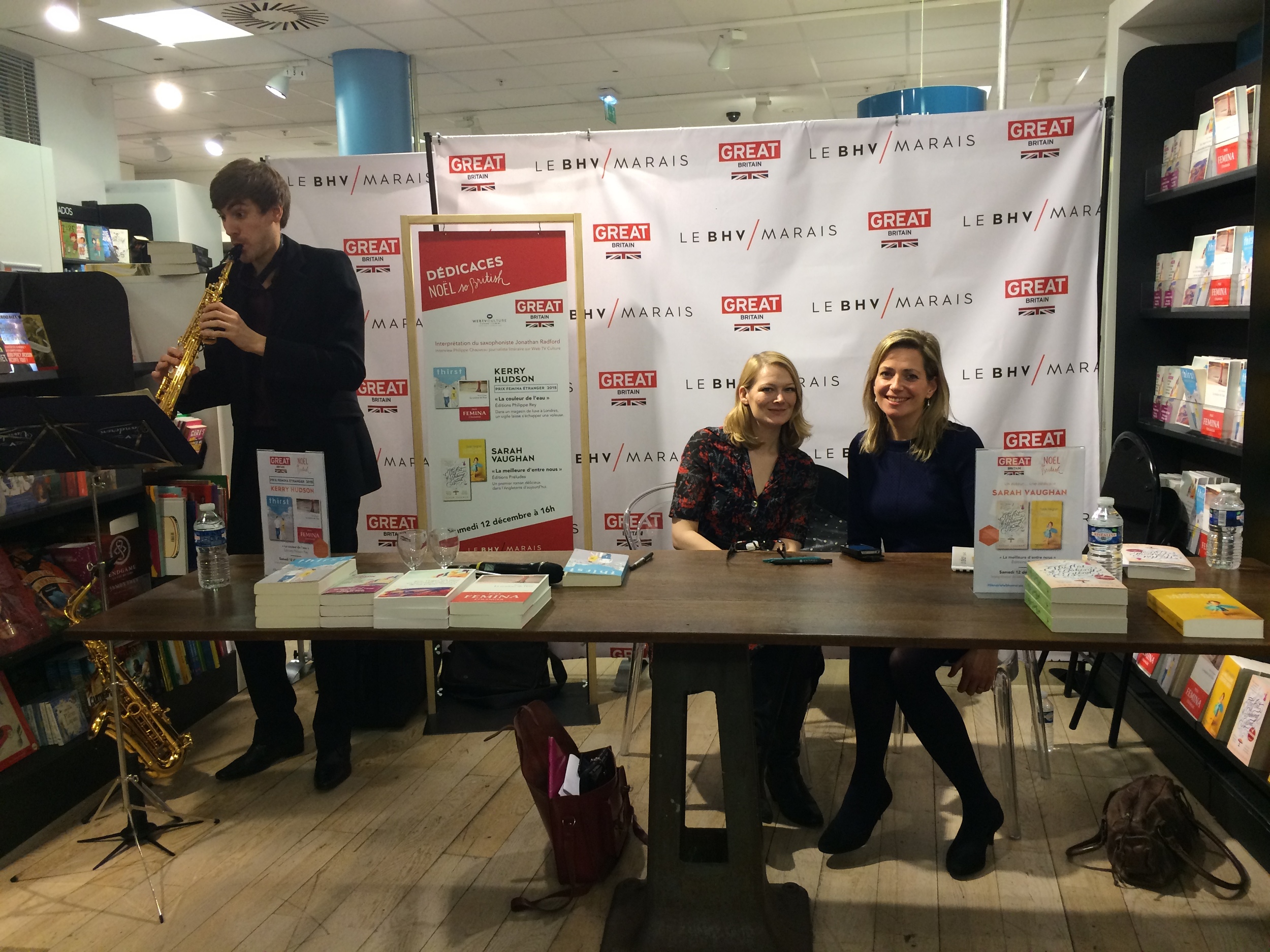
Even blanketed with grey cloud Paris was glorious this weekend, when I raced there for a whistlestop book signing. There was champagne and exquisite patisserie, a saxophonist rendering Purcell and Britten afresh, and of course The Eiffel Tower - glimpsed here from the seventh floor of le BHV Marais, in whose vast book department I was interviewed about La Meillure d'Entre Nous or The Art of Baking Blind.

I was there with the award-winning literary novelist Kerry Hudson to celebrate the Best of British culture in an event organised by the British Embassy, but in the run-up to going I wasn't sure if I should be there. I confirmed my tickets the day before the terrorist attacks - and I doubted anyone would want it to go ahead. Why would Parisiens want to visit a department store to hear a novelist discuss her book about why we bake - at first glance, a frivolous subject - when they had so many more pressing issues on their minds?
And then I talked to a Parisian friend who had read my book and she banished my self doubt. Your book is about women going on a process of self-discovery, she said, and becoming stronger. About one woman, in particular, who finally rejects the domineering man in her life when she realises she can be much happier alone. It's about abandoning rigid expectations, including our own pressure to be perfect, and about our need for love - or, at the very least, for understanding. It celebrates kindness and empathy - two of the things the terrorists attacked.
Of course, reading itself, is one way to increase that empathy: to open ourselves up to new experiences and emotions, glimpsed through the pages of a book, within the safety of our own homes. In schoolgirl French, I tried to explain that "nous devons celebrer la cuisine, celebrer less femmes et leur fragilites, celebrer l'impossibiltie de la perfection et l'importance d'être aime. Et lisons plus et toujours plus de livres."
And then I finished Kerry Hudson's disquieting, poignant Thirst - about a sex-trafficked Ukrainian girl who finds love with an emotionally-damaged security guard, two characters the likes of whom I am unlikely to come across in real life. And it confirmed something every reader knows: that, at the risk of sounding sanctimonious, books, far from being frivolous, are the passports to our trying to live a more compassionate, empathetic life.


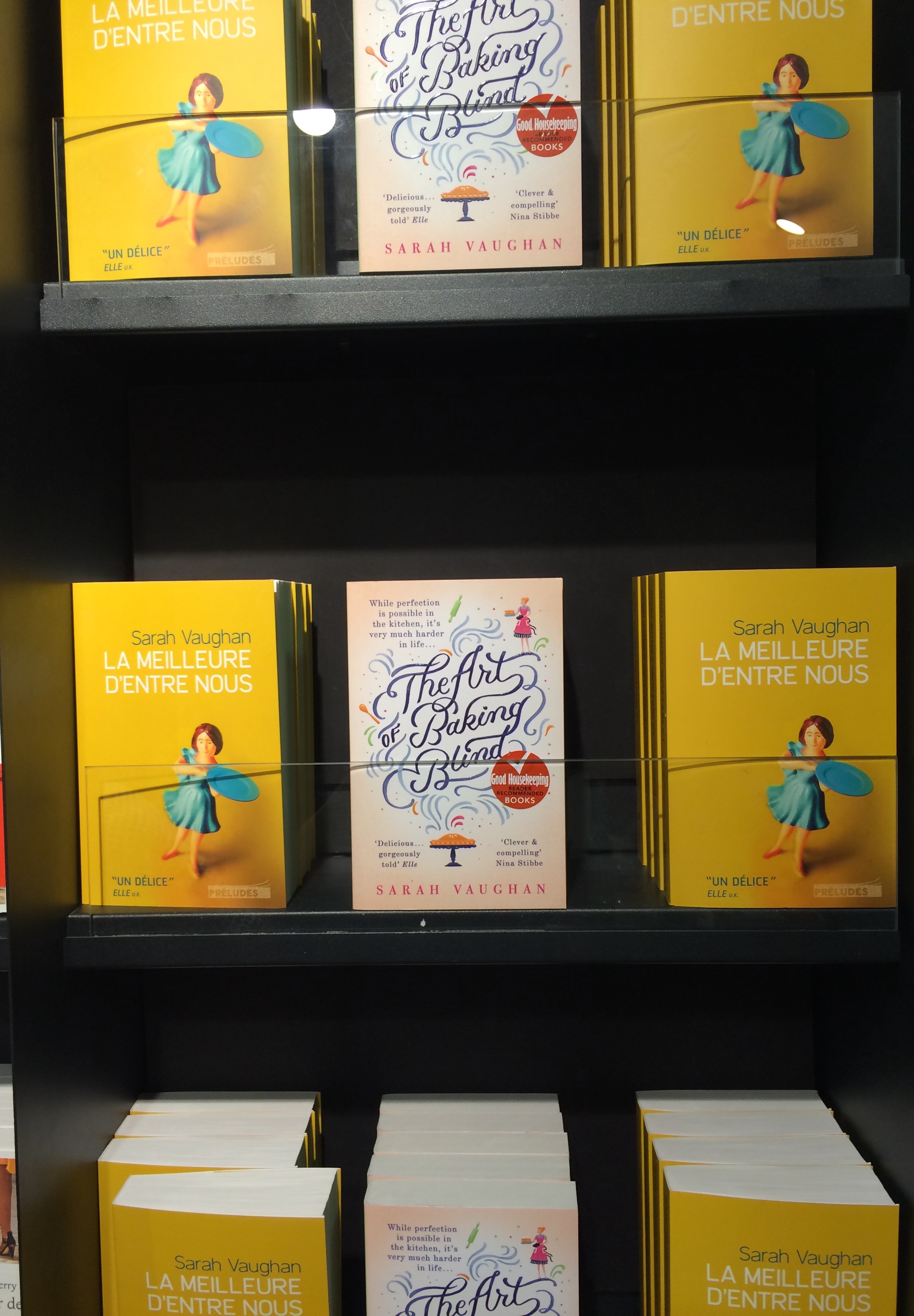
Happy Czech publication day to The Art of Baking Blind.

The Art of Baking Blind is published in its Czech edition today - the sixth of its foreign translations - and I'm delighted to share Mlada Fronta's cover. The title's been changed to Love with the Taste of Macarons and the strapline reads ‘One baking competition, five fates...’ But what I find really interesting is that my name has been stretched and made far more interesting. Vaughan, my married surname, is monosyllabic and not particularly noteworthy but Vaughanová makes me sound like a diva.
With those extra two syllables - and an acute accent - I've become the sort of author who might spend her days eating lavender macarons and reclining on a chaise longue instead of googling recipes for traditional Czech pastries - and trying to plot her third novel. My new name makes me think of Anna Karenina: of furs, and illicit love affairs, and tragedy - not of the school run, and stomping back through the leaves with my kids to oversee spellings and music practice, to sort the washing and cook dinner. Sarah Vaughanová. I doubt I'll manage to be diva-ish for long.